Cooler evenings can be a welcome change in North Florida, but they also bring a familiar concern for homeowners with St. Augustine grass: expanding patches of yellow, tan, or brown turf. When mild temperatures meet lingering moisture, fungal disease can become a problem even in a lawn that looked healthy throughout summer.
The condition many homeowners call “brown patch” in St. Augustine grass is generally known as large patch. It is associated with a Rhizoctonia fungus and tends to become active during cooler, wetter weather. Recognizing the signs early and adjusting lawn care habits can help limit damage.
Why Fall Weather Creates Favorable Conditions
As temperatures drop, turf growth slows and moisture may linger longer on grass blades and around their bases. Overnight dew, rainfall, and unnecessary irrigation can keep the lawn wet for extended periods.
That combination creates favorable conditions for large patch. Shaded areas, poorly drained spots, and sections receiving too much sprinkler coverage may stay wet longer than the rest of the yard. A watering schedule that made sense during summer may now be delivering more water than the lawn needs.
How to Recognize a Possible Outbreak
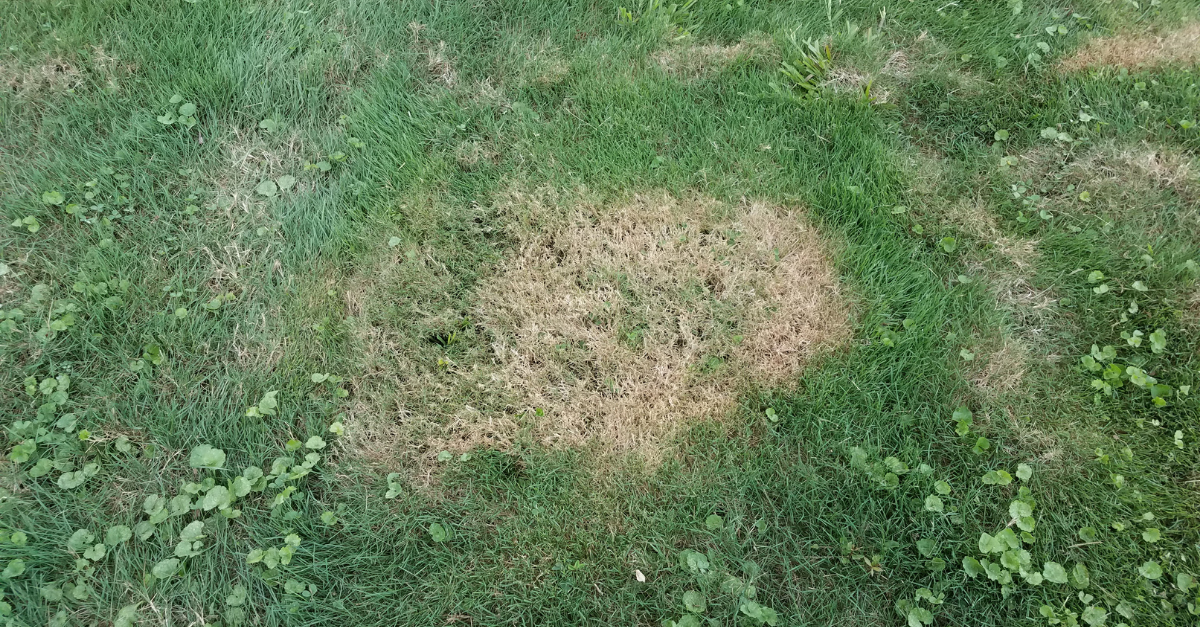
Large patch often starts as small areas of discolored turf that expand into roughly circular patches. Look for:
- Yellow, tan, or brown circles that become larger over time.
- A yellow or orange edge around an actively expanding patch.
- Irregular areas of damage where several patches have grown together.
- Grass blades that pull away easily from affected shoots, sometimes with a dark, rotted area at the blade’s base.
Some patches may develop greener centers while the outside edge continues to show damage. Take photos and note whether the affected area is spreading, especially after wet weather.
Appearance alone is not enough to confirm the cause. Irrigation problems, insect damage, other diseases, and seasonal changes can also discolor grass. A professional assessment can help avoid treating the wrong problem; in uncertain cases, a diagnostic sample may be needed.
Watering Habits That Can Make It Worse
When grass turns brown, adding water is a common reaction. If disease is the cause, extra irrigation can prolong the wet conditions that favor it.
Avoid frequent, light watering and unnecessary evening irrigation. Watering late in the day can leave turf wet through the night. When irrigation is needed, early morning is generally a better choice, subject to local watering restrictions.
Check soil moisture and recent rainfall before running the system. Inspect sprinkler heads for leaks, overlapping coverage, or zones that soak shaded areas along with sunny ones. Make sure rain shutoff equipment is working, and do not water simply because the timer is set to run.
If the same area repeatedly stays soggy, address the drainage or irrigation issue rather than relying on treatment alone.
Why More Fertilizer Is Not the Answer
Trying to green up an affected patch with extra fertilizer can backfire. Excess nitrogen, particularly as warm-season turf growth slows, can increase susceptibility to disease and encourage growth at the wrong time.
Do not apply a high-nitrogen product simply because a section of lawn is discolored. Fertilization should reflect the grass type, season, growing conditions, and applicable local rules. A lawn care professional can help determine whether the turf needs nutrients or whether moisture and disease management should come first.
Continue mowing at the appropriate height for St. Augustine grass, avoid scalping, and avoid mowing wet, affected turf when possible. Cleaning lawn equipment after working in diseased areas can also help reduce the movement of infected material.
When Professional Fungus Control Makes Sense
Consider a professional evaluation when patches are spreading, the same areas develop symptoms each fall, or changes to watering do not resolve the problem. Early diagnosis is especially useful because damaged turf may recover slowly as cooler weather limits growth.
A professional fungus control program can combine an assessment of the disease with appropriately timed treatments and recommendations for irrigation, drainage, and fertilization. Fungicides can help manage active disease, but they do not immediately restore damaged grass or replace good maintenance practices.
For lawns with a confirmed history of recurring large patch, a professional may recommend preventive treatment based on seasonal conditions. The treatment approach should be tailored to the property rather than based on a blanket assumption that every brown spot is fungus.
Fungus Control Is Part of Ocean View’s Turf Package
Ocean View Landscape Management’s six-application turf package includes fungus control as part of its lawn care services. The goal is to support turf health while addressing the conditions and problems that affect North Florida lawns throughout the year.
Explore our Fertilization and Pest Services to learn more about the turf package. For general service and billing questions, visit our General and Billing FAQs.
Noticing tan circles or spreading brown areas in your lawn? Contact Ocean View Landscape Management to discuss an assessment before adding more water or fertilizer.